Dnipropetrovsk region – when aid becomes presence
26.02.2026
News
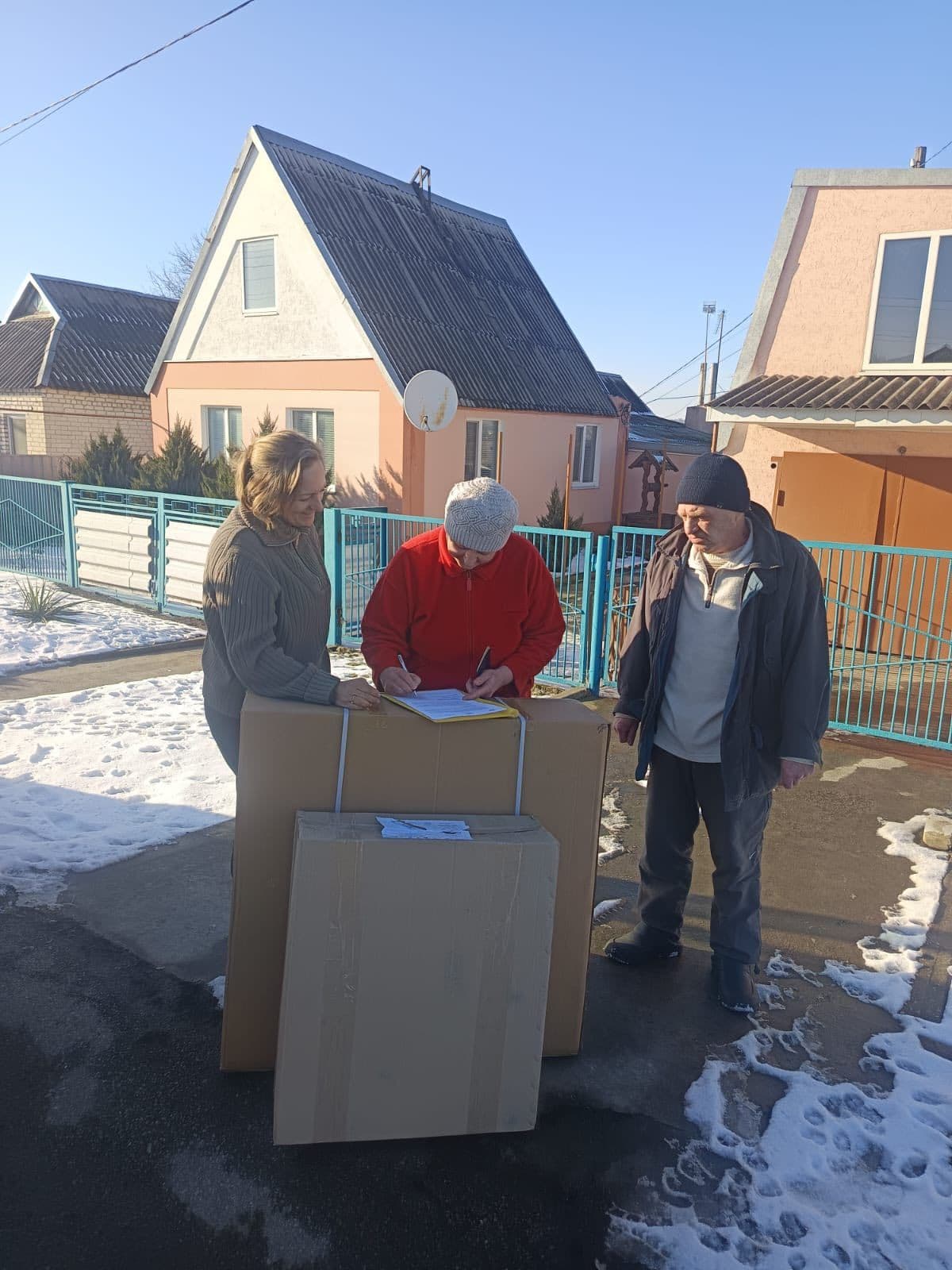
Dnipropetrovsk region. Rozdory and Vasylkivka.
When you plan a trip, everything looks structured — the list of recipients, logistics, equipment checks, routes. From the outside, it looks like the organisation of a process. Inside, there is always more.
In Vasylkivka, you don't read about the war in the news — you hear it. It is close by. And even when you try to focus on the task at hand, your body reacts to every muffled sound in the air.
Anti-drone nets hang over the roads. They stretch over courtyards, streets, and open spaces. They are a security measure and, at the same time, a constant reminder that danger is part of everyday life here.
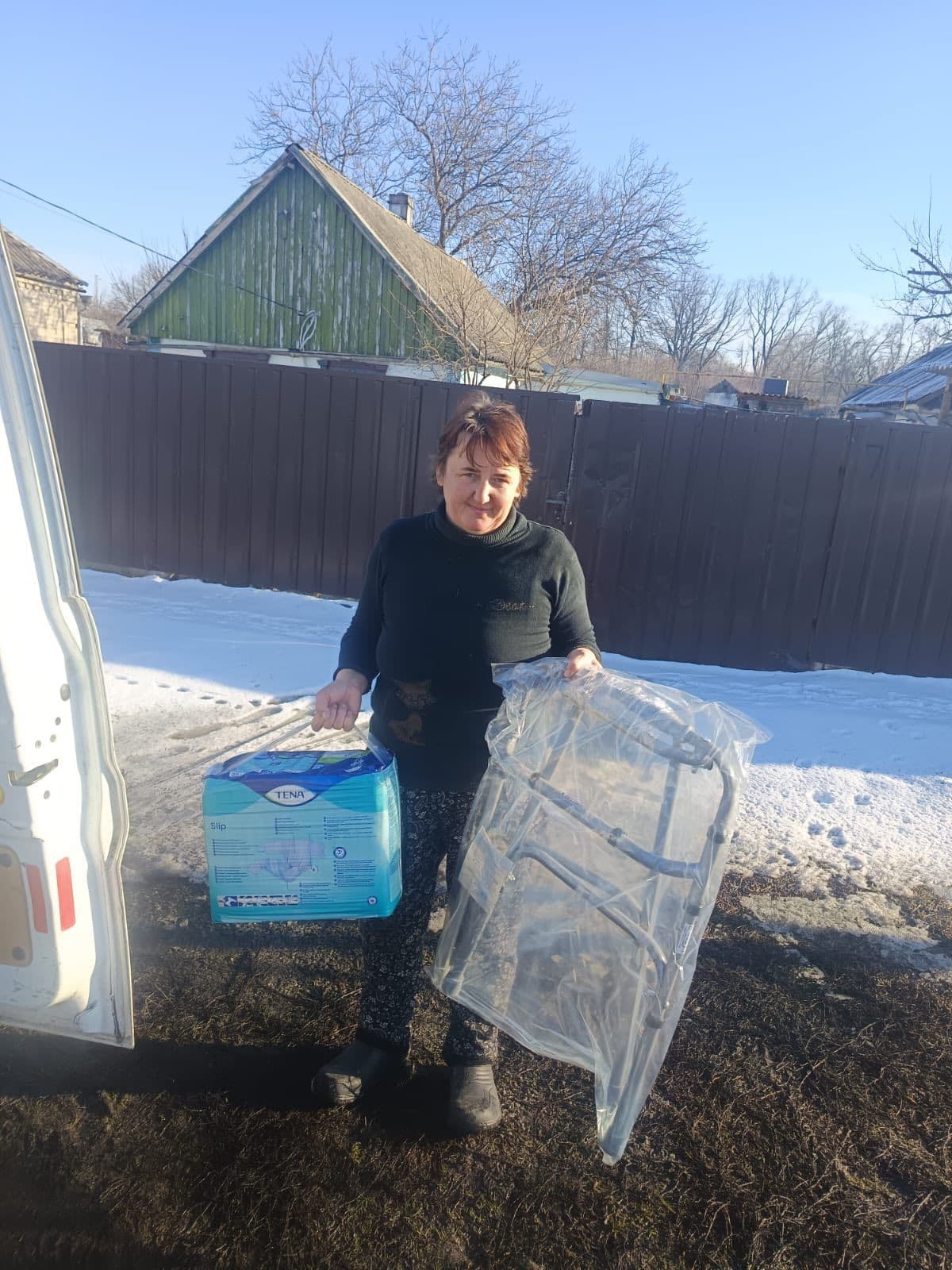
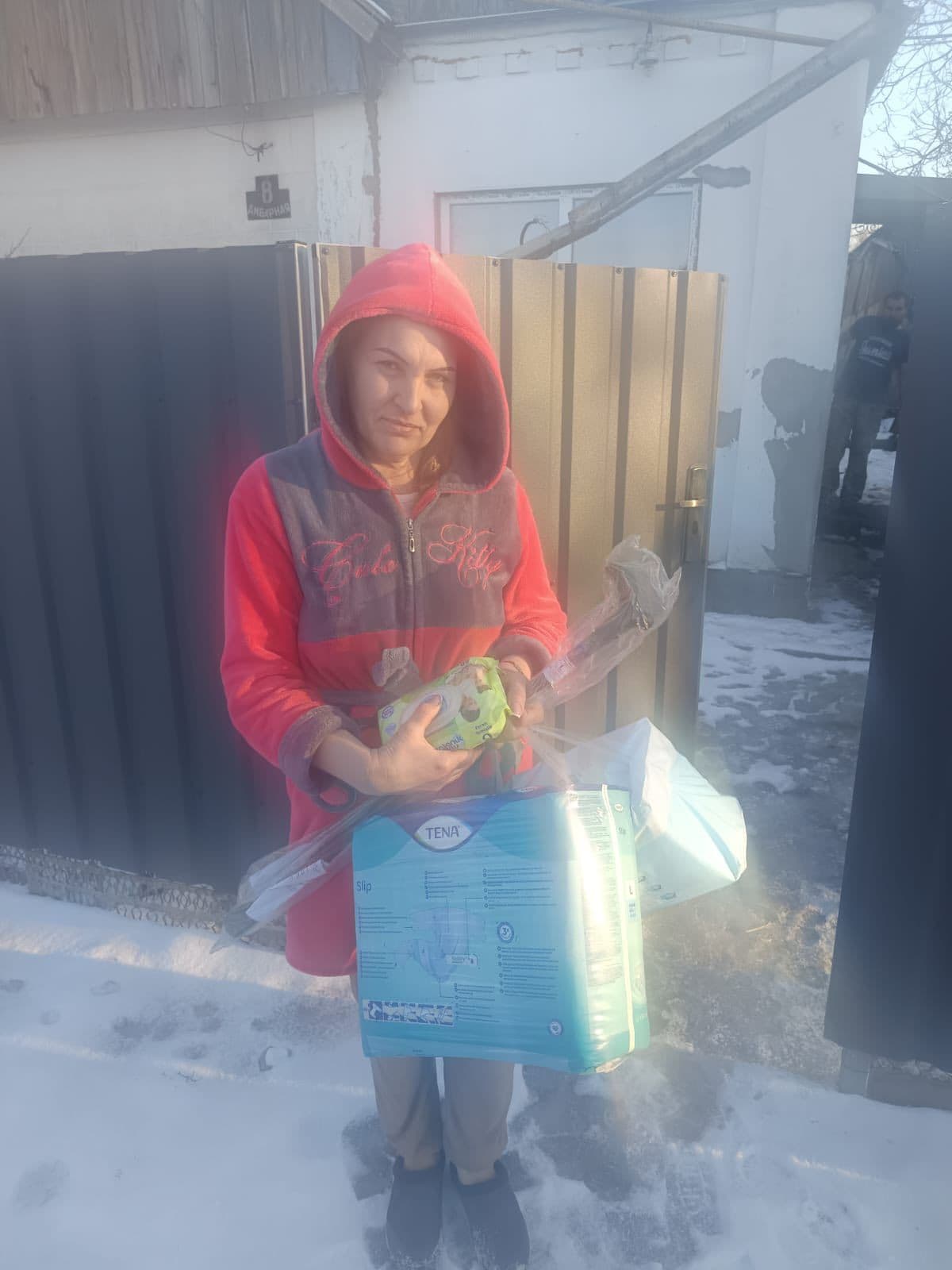
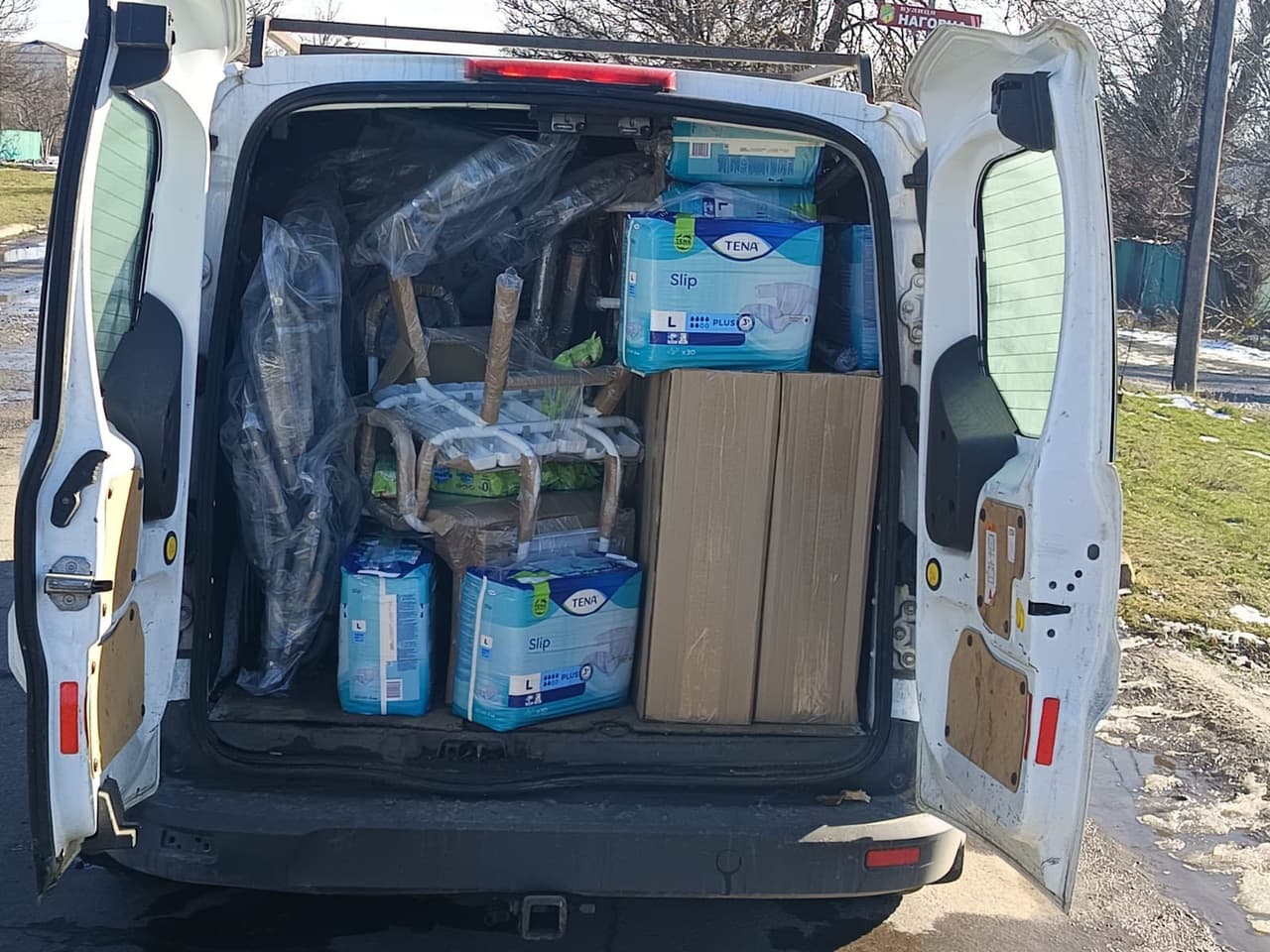
We arrived with technical rehabilitation and care equipment — wheelchairs, rollators, walkers, crutches, canes, toilet chairs and shower chairs. It's not just a matter of ‘handing them out.’ Each delivery involves a conversation, clarification, review of conditions, and selection of the right equipment for the person. It is important that the device not only exists, but actually works in everyday life.
For some, this means getting out of bed on their own.
For others, it means getting to the kitchen without assistance.
For others, it means regaining some dignity.
But this time, it wasn't the things that stood out the most.
What I remember most are the eyes of people who live alone. They accept help cautiously, sometimes reluctantly, but then they start talking. About their daily lives. About their fears. About the silence in their homes. And it becomes clear that it is not just the product that is important to them. It is important to them that someone enters their space and sees them.
We don't rush. We listen.
And in these moments, you realise that sometimes the greatest support is simply being there. When you sit next to someone and give them the opportunity to speak. When they feel that they have not been erased from the map of life.
Despite the proximity of the front line, people here speak calmly. Without unnecessary words. ‘We are holding on, we are hoping,’ they say. And in this simple phrase, there is great inner strength.
We completed the entire plan. Everything was delivered to the right places.
But we returned with the understanding that humanitarian aid is not just boxes and equipment.
It is about trust.
About humanity.
About staying together in the most difficult conditions.
And that is what keeps us going.
We left, and they stayed.
And that stays with us...
The trip took place as part of the project
‘Protection, health care and inclusion of vulnerable populations in Dnipropetrovsk, Donetsk and Zaporizhzhia regions’
with the support of the Humanitarian Fund for Ukraine (UHF)
and in partnership with Volontariato Internazionale per lo Sviluppo.
News and events
All publicationsNews
Early support - timely assistance
The Ministry of Health of Ukraine has approved a clear procedure for follow-up observation of newborns and children under 4 years of age who are at risk of developing chronic diseases. Simply put, Ukraine now has uniform rules for the care of children who require special attention from the first months of life. What does the new Procedure define? Who exactly is subject to systematic medical observation How often examinations should take place What areas of development are assessed — motor skills, speech, cognitive skills, emotional state, social adaptation How parents are informed and what recommendations they should receive The main idea is to identify potential difficulties as early as possible and provide timely assistance: doctors, rehabilitation services, early intervention services. The document was developed by the Ministry of Health in cooperation with the Advisor to the President of Ukraine on Children's Rights and Rehabilitation as part of the barrier-free strategy initiated by Olena Zelenska. For LAOPD, this is another important step towards systemic accessibility. Because accessibility is not just about ramps and transport. It is when a child receives support from the first months of life and the family is not left alone to face challenges.
04.03.2026
Read more
News
A fully accessible swimming pool has opened in Lviv
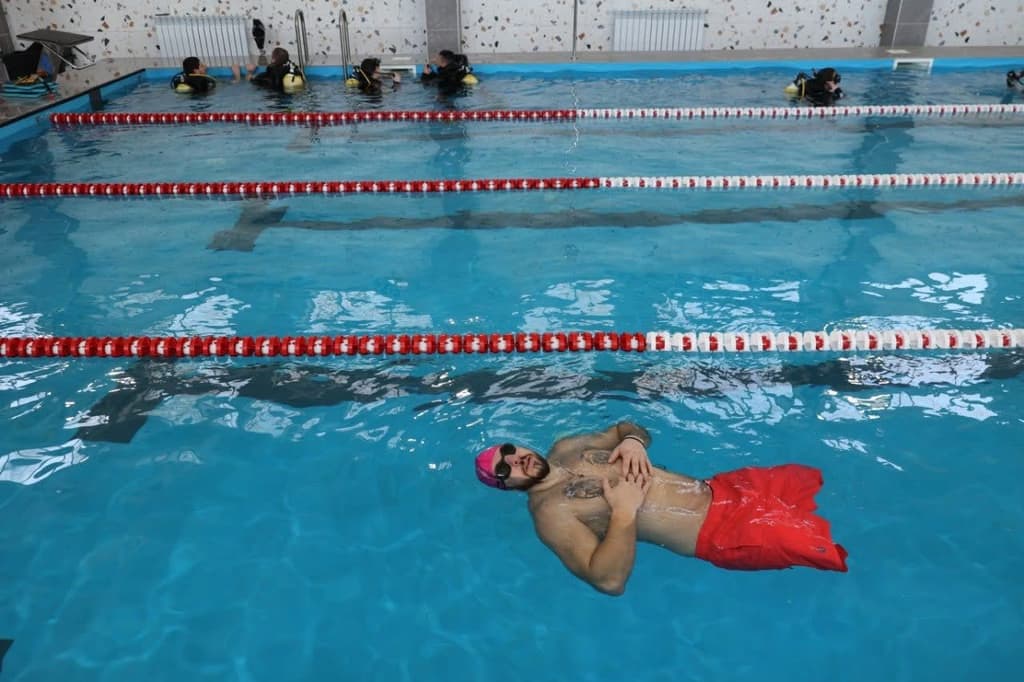
A fully accessible 25-metre swimming pool has opened in Lviv — a space where accessibility is not just a declaration, but a reality. Its main feature is a special remote-controlled lift. People who use wheelchairs can get into the water and back out again independently. Without outside help. Without awkward requests. Without barriers. What has been implemented: a ramp and fully accessible entrance have been installed; showers, changing rooms and toilets have been renovated to meet the needs of people with reduced mobility; separate rooms have been provided for wheelchair users. The city allocated 8 million hryvnias in subsidies to create this space. First and foremost, the pool will be used for the rehabilitation of veterans. At the same time, it is open to city residents and schoolchildren. And this is fundamental. Because accessibility is not ‘separate for someone.’ It is equal access for all. Registration : 097 498 86 59 or at the reception desk of the complex. For veterans and family members of fallen heroes : 099 43 63 465. Photo: Roman Baluk
03.03.2026
Read more
News
Ivan Artyukh — four gold medals at international competitions
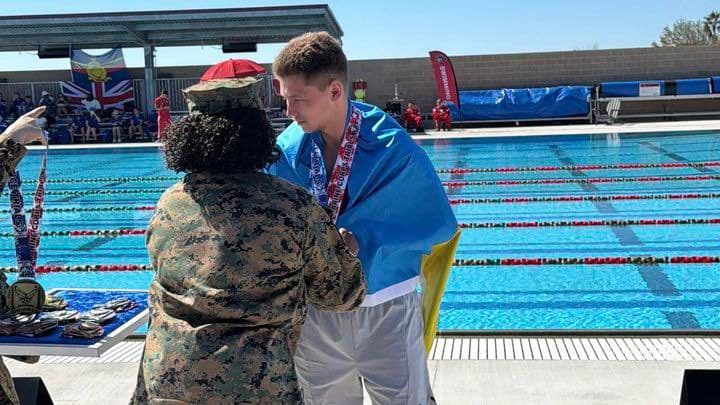
Ivan Artyukh, a veteran from Luhansk region, won four gold medals at the Air Force and Marine Corps Trials, an international competition for veterans held in the United States. He achieved this in all disciplines in which he participated. This is a source of great pride. And a powerful example for everyone. Ivan is a veteran who has gone from the front lines to the international sports arena. Before the full-scale invasion, he worked as a police investigator. With the start of the war, he joined the ranks of the combat units: the Luhansk direction, the Kharkiv counteroffensive, the battles for Lyman and Bakhmut. After a serious injury, he underwent a long rehabilitation and completed his service. Today, Ivan works as a lawyer and continues to be active in sports. At the competition in the United States, he won gold in four swimming events: 100 m freestyle 50 m freestyle 50 m backstroke 50 m breaststroke These are not just medals. They are a symbol of strength of spirit, endurance and perseverance. They are proof that sport can be part of recovery and a new phase of life after war. Ivan plans to continue competing, particularly in cycling, rowing and sitting volleyball. His story is about moving forward. About believing in yourself. About the fact that after the most difficult trials, you can win again — and inspire others not to give up.
02.03.2026
Read more