Talent matters more: how people with disabilities build careers in IT

05.03.2026
News
New research and stories from the professional environment show that a career in IT for people with disabilities is entirely possible if a barrier-free environment is created and competencies are valued over limitations.
Today, many Ukrainian IT companies view inclusion not as a ‘social bonus’ but as an important part of corporate culture and business strategy:
- open hiring without quotas, where everyone has a chance to get a job, regardless of physical abilities
- focus on professional skills and talents, not diagnoses or stereotypes
- implementation of internal policies and support mechanisms to reduce the risk of discrimination
The IT environment has become much more accessible thanks to modern technologies. For example, screen reader technologies — programmes that read aloud the information on the screen — are now a standard tool that allows people with visual impairments to work fully with digital products.
There are many real-life examples of people with disabilities not only studying and working in IT, but also building successful careers:
- mastering DevOps or accessibility testing specialisations
- becoming full-fledged members of professional teams
- working remotely, which removes many physical barriers
The development of inclusion in IT is not only about equal opportunities.
It is also about:
- developing a competitive economy where all talents are involved
- changing the mindset of business and society
- creating a diverse, productive and modern working environment
The IT industry is already demonstrating that talent matters more than limitations — if barrier-free conditions and support are created.
Because accessibility is not about individuals.
It is about equal access to opportunities for all.
News and events
All publicationsNews
When ‘digitalisation’ creates new barriers: queues due to the transfer of social payments
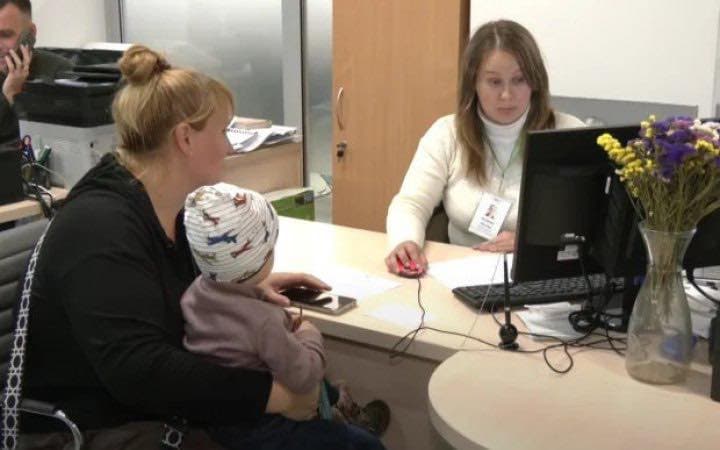
In recent months, people across Ukraine have been queuing for hours at the service centres of the Pension Fund of Ukraine. Among them are pensioners, internally displaced persons, young parents and people with disabilities. The reason is the transfer of social payments from social protection agencies to the Pension Fund. The reform was supposed to simplify the social support system, but in practice, many difficulties have arisen. What caused the problems: During the transfer of personal files from social protection agencies to the Pension Fund, errors occurred in the registers. Some of the data had to be restored manually, which significantly slowed down the system. The Pension Fund was simultaneously tasked with administering dozens of new types of social benefits, including assistance to people with disabilities, families with children, and subsidies. The system was not fully prepared for such a workload. The ‘online services’ that the state is banking on are not accessible to everyone. For many elderly people, people with disabilities, or those who do not use digital services, electronic identification or video calls are a new barrier rather than a simplification. Physical barriers also add to this: not all Pension Fund offices are accessible to people with reduced mobility. Stairs, lack of ramps or other obstacles make it even more difficult to access services. Barrier-free access is not just about infrastructure. It is also about the accessibility of public services, understandable procedures, simple digital solutions and respect for people's needs. Reforms of the social system are indeed necessary. But it is important that they do not create new barriers for those who need support the most.
11.03.2026
Read more
News
Online accessibility: government websites are becoming more accessible
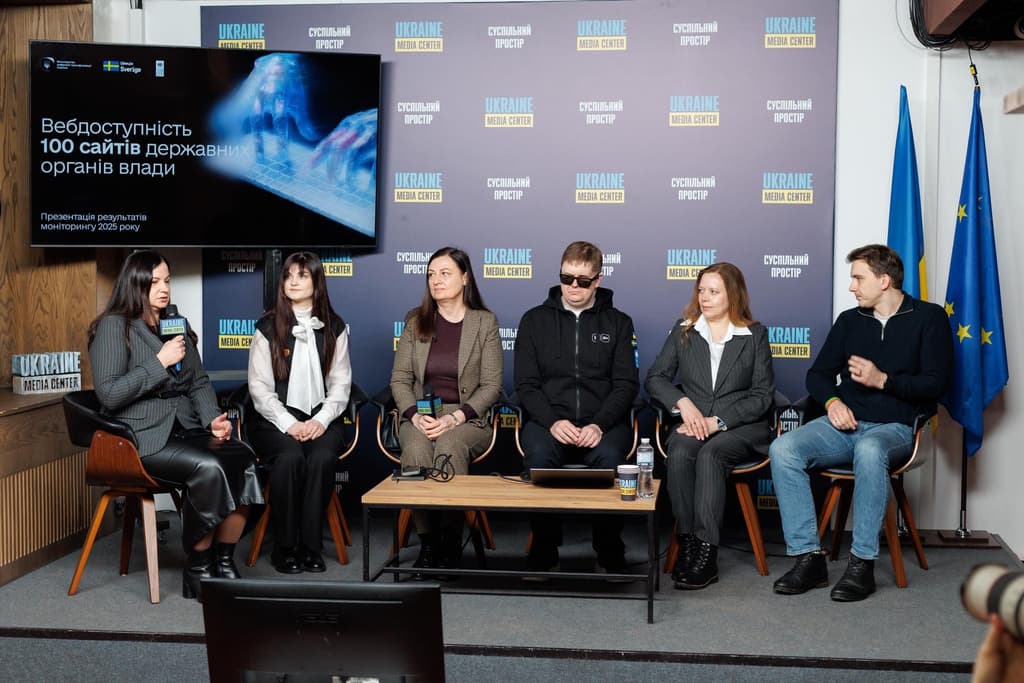
Digital accessibility is an important part of a barrier-free environment. For many people, government websites are the main way to obtain information, submit applications or use services. According to the results of a new accessibility monitoring of 100 websites of executive authorities, conducted by the United Nations Development Programme in cooperation with the Ministry of Digital Transformation of Ukraine, 52 government websites already have a sufficient or high level of basic accessibility. This is significant progress: the number of websites with a high level of accessibility has increased from 7 in 2024 to 29 in 2025 another 23 websites have a sufficient level of accessibility in total, more than half of government online resources already meet the basic requirements for digital inclusiveness During the assessment, key elements of web accessibility were checked: text contrast alternative text for images clear link names accessibility of forms and buttons ability to control the website with a keyboard At the same time, almost half of government websites still have a medium or low level of accessibility. This means that barriers remain for people who use screen readers, have visual impairments, or have other specific needs when using digital services. Accessibility is not just about ramps or lifts. It is also about the accessibility of information and government services online. A digital state should be convenient for everyone, regardless of age, health, or technical skills. It is important that the principles of digital accessibility become the standard for all government services.
10.03.2026
Read more
News

‘Accessible’: Ivano-Frankivsk will celebrate barrier-free spaces
Ivano-Frankivsk has introduced a special city award, ‘Accessible,’ for establishments and spaces that truly care about accessibility. This initiative is designed to support businesses and institutions that adapt their premises to the needs of people with disabilities, veterans, parents with prams, and older people. Various establishments are eligible for the award: cafes, restaurants, shops, pharmacies, beauty salons medical centres, banks, hotels, sports clubs residential complexes and buildings that have been renovated with accessibility in mind public spaces - parks, shopping centres, educational institutions, co-working spaces The facilities will be inspected by a special monitoring group involving accessibility experts, representatives of public organisations for people with disabilities and the veteran community. Facilities that meet the criteria will receive an ‘ACCESSIBLE’ sign for their façade and will be included on the city's online map of accessible places. The LAOPD considers such initiatives to be very important. After all, accessibility does not begin with laws and regulations alone — it begins with examples that show that accessibility can and should be the norm. And when the city recognises responsible businesses, it encourages others to make their spaces accessible to everyone. This is how, step by step, a truly barrier-free environment is created.
09.03.2026
Read more