Three-day training course “Barrier-free in action: inclusion, protection, resilience” completed
14.11.2025
Events
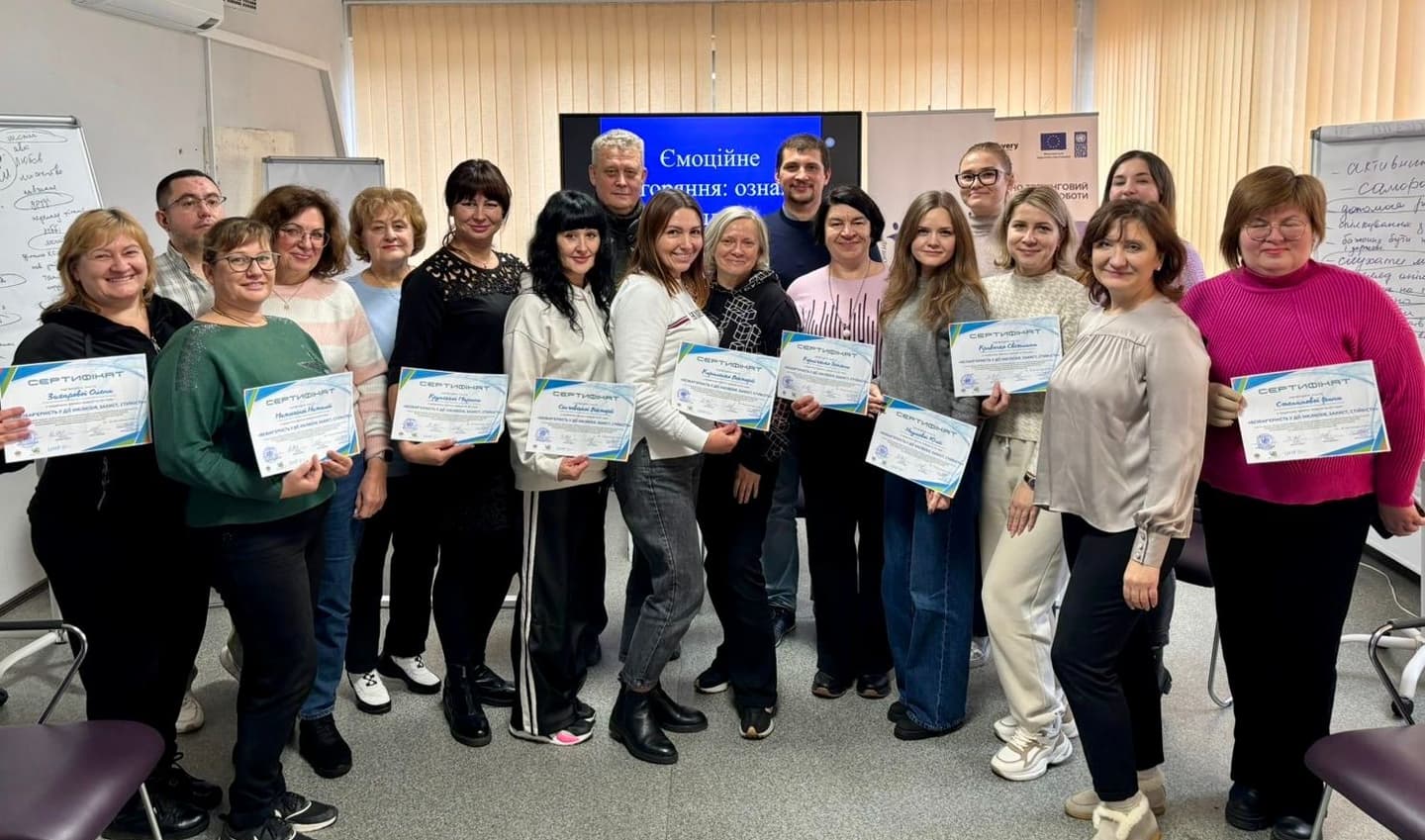
The Luhansk Association of Organizations of Persons with Disabilities, in partnership with Volontariato Internazionale per lo Sviluppo (VIS), held a three-day training course entitled "Barrier-free in action: Inclusion, Protection, Resilience“ as part of the project ”Protection, Health Care, and Inclusion of Vulnerable Groups in Dnipropetrovsk, Donetsk, and Zaporizhzhia Regions," implemented with the support of the Humanitarian Fund for Ukraine (UHF).
During three intensive days, 18 specialists from social services, medical and educational institutions, and the public sector worked on how to make local communities accessible, safe, and inclusive for all.
The training focused on practical tools, real-life cases, and solutions that participants can apply in their daily work.
Day 1. Barrier-free in practice
Participants examined the six components of barrier-free accessibility, learned how to assess spaces for accessibility, worked with checklists, and analyzed real-life examples of building and service adaptation.
A key moment was the task “Model of an inclusive space,” which allowed participants to take a fresh look at even familiar spaces and identify their strengths and barriers.
Day 2. Inclusion, protection, and working with vulnerable groups
The main focus was on:
algorithms for responding to gender-based violence;
supporting children in crisis situations;
interaction with parents and cross-sectoral cooperation.
During the practical block, participants worked with real cases and developed ethical and safe solutions for working with children and adolescents who have experienced difficult life events.
Day 3. Burnout prevention and specialist resilience
Discussed:
the balance between empathy and professional boundaries;
self-regulation and recovery techniques;
the role of team support in daily work.
The final integration session was devoted to developing action plans that participants will integrate into the activities of their institutions in the near future.
Training objective
To increase the capacity of professionals in the social, educational, medical, and civil society sectors to implement the principles of accessibility, inclusion, and safe interaction with people with disabilities, children, and other vulnerable groups.
Acknowledgements
To the trainers — for their professionalism, depth, and sensitivity.
To the participants — for their activity, openness, and willingness to change their communities.
All participants received certificates, but the most valuable result is the changes they will bring to their communities.
News and events
All publicationsEvents
Second wave of training “Barrier-free in action: inclusion, protection, sustainability”
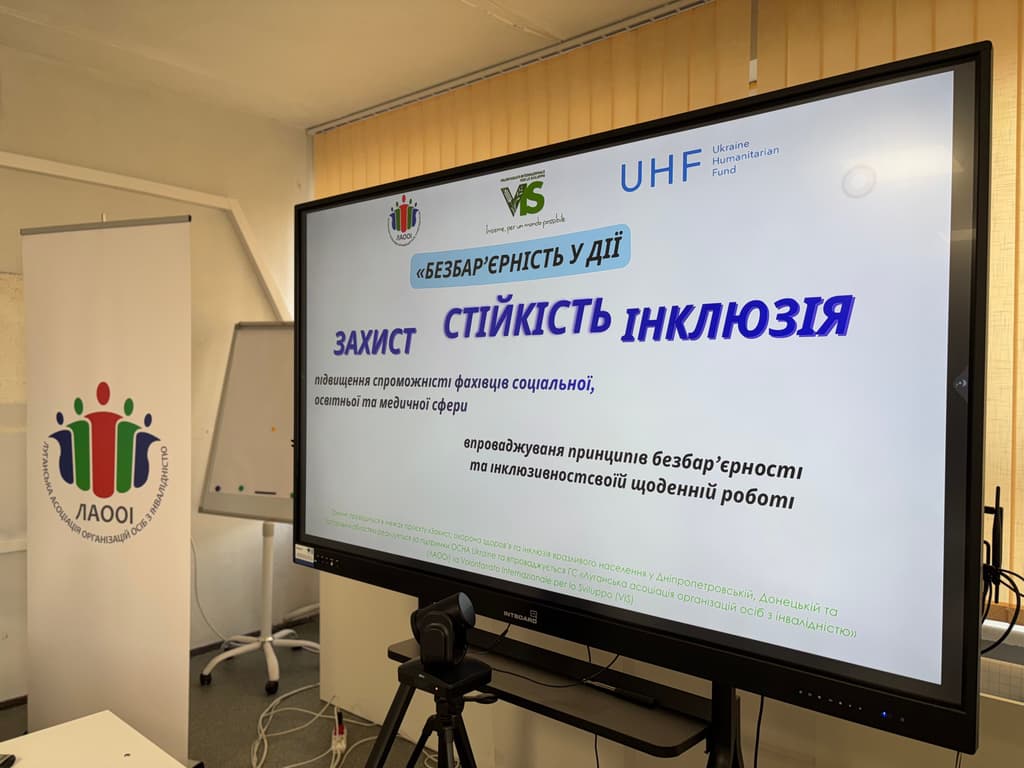
The second wave of the training course “Barrier-free in action: inclusion, protection, sustainability” has begun in Dnipro, organized for specialists in the social, educational, and medical fields and representatives of public organizations. The aim of the training is to improve competencies in the field of accessibility, inclusion, and the creation of a safe environment for people with disabilities, children, and other vulnerable groups. Practical start of training The second wave began with a practical block dedicated to physical accessibility. Participants analyzed examples of public space adaptation, worked with accessibility checklists, and discussed common barriers and ways to overcome them. The format of the session encouraged active interaction, exchange of experience, and the search for solutions that can be implemented in the daily work of institutions. The training is conducted as part of the project "Protection, health protection, and inclusion of vulnerable populations in Dnipropetrovsk, Donetsk, and Zaporizhzhia regions" is implemented with the support of the Humanitarian Fund for Ukraine (UHF) and implemented by the Luhansk Association of Organizations of Persons with Disabilities (LAOPD) and Volontariato Internazionale per lo Sviluppo (VIS).
26.11.2025
Read more
Articles
Parking in spaces reserved for people with disabilities: why this is a matter of dignity
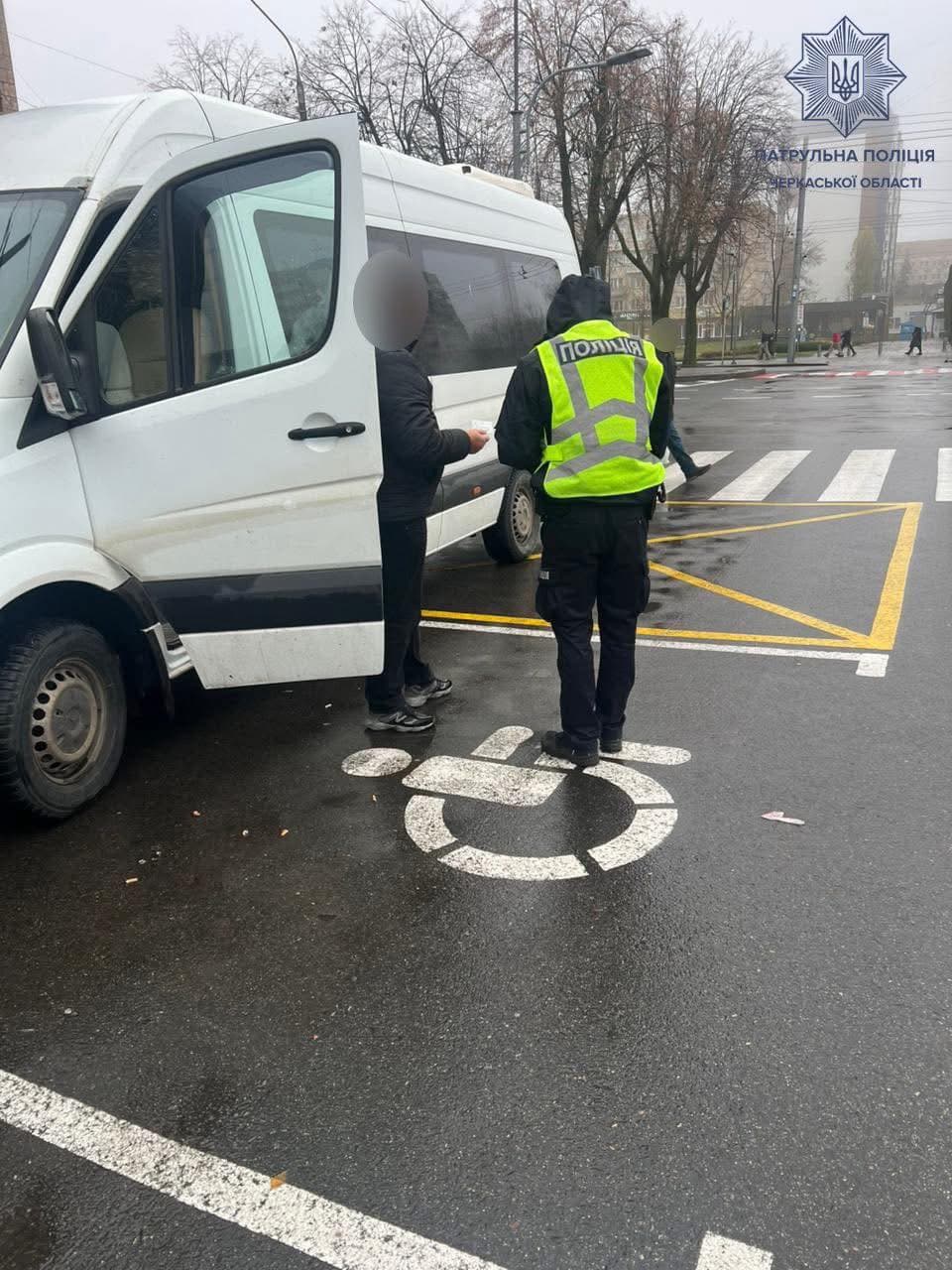
Parking in spaces reserved for people with disabilities is a topic that is constantly discussed. And constantly violated. Every day we see the same familiar picture: there are markings, signs, warnings, but someone still parks their car ‘just for a minute,’ ‘because they need to hurry,’ ‘because there is no space nearby.’ Behind these ‘minutes’ lies the reality of people who are physically unable to walk a few dozen metres. For them, it is not a matter of convenience, but the only way to get to a shop, hospital, pharmacy or work. This is not about fines. It is about respect and responsibility, which begins not with the police, but with personal culture. How to educate society • Constantly remind people. Behaviour change requires consistency. • Record violations: photos, videos, licence plates — this works effectively. • Talk to people directly: calmly but firmly explain that this is not a privilege, but a necessity. • Create zero tolerance: when those around you don't remain silent, ‘I'll be back in a minute’ disappears as a phenomenon. • Involve businesses: car parks must respond, issue warnings, call the police and act systematically. A space for a person with a disability is about dignity. By occupying it without the right to do so, you take away that dignity. How it works in the EU: the example of Germany • Only those who have an official permit card under their windscreen can park. • Checks are regular and without warning. • Fines are substantial, and in many cities, cars are towed away immediately. • A short stop without a card is a full-fledged violation. • Zero tolerance principle: one violation — irreversible consequences. What Ukraine needs • A unified electronic parking permit system for people with disabilities. • The ability to check permits through the police or parking services. • Automatic fines and vehicle towing, as is the practice in Europe. • An increase in the number of accessible spaces in all shopping centre, government and municipal car parks. • QR codes for instant complaints and quick responses. As long as the system allows impunity, violations will remain the norm. A parking space for a person with a disability is not a ‘convenient place.’ It is a right, a sign of respect, and a test of humanity.
25.11.2025
Read more
News
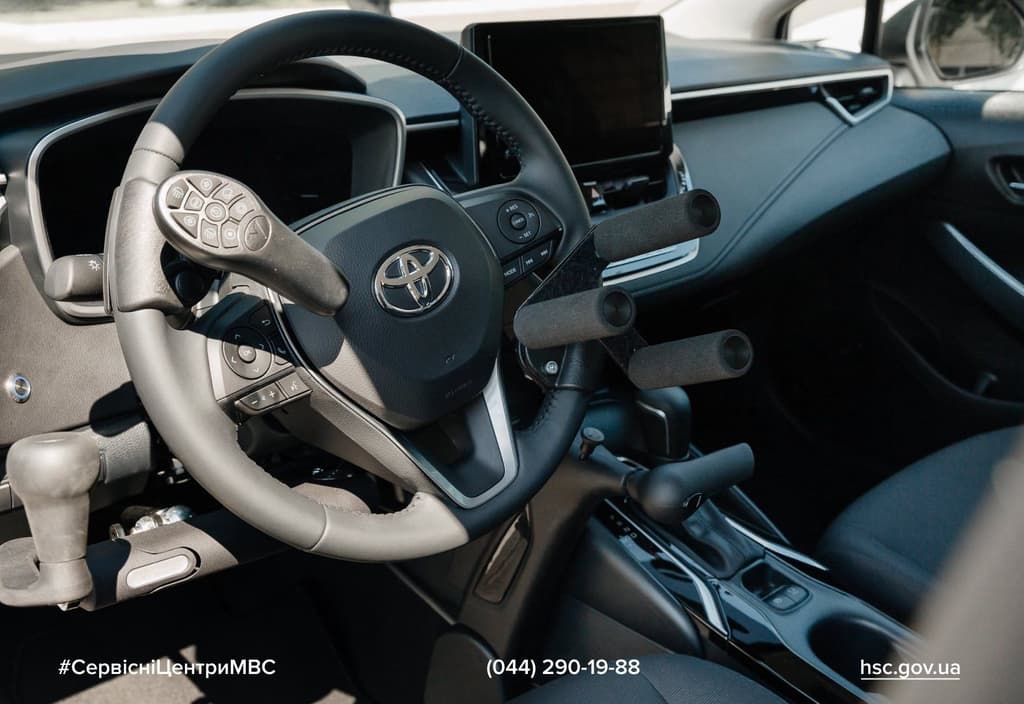
Barrier-free driving: freedom of movement that is still not available to everyone
Barrier-free driving is not just about convenience. It is about freedom, independence, and regaining control over one's life. Although barrier-free driving schools and special driving courses for people with disabilities already operate in Ukraine, their number is still critically low. Today, such driving schools exist in only seven regions of Ukraine: Kyiv, Lviv, Khmelnytskyi, Kirovohrad, Dnipropetrovsk, Vinnytsia, and Odesa regions . For a country where the number of veterans and people with mobility impairments is growing every day, this is not enough. A car for a person with a disability is not a luxury. It is an opportunity to: • move around independently • work and build a career • not depend on outside help • regain dignity and autonomy Barrier-free driving schools should be available in every region. The right to mobility cannot be a formality or a declaration — it must be a real opportunity . It is good that such services have already appeared. But while there are so few of them, thousands of people remain without the chance to undergo training, obtain a driving licence and regain their basic freedom of movement. Photo: Mykola, a soldier, takes a practical exam at the Barrier-Free Driving School at the Ministry of Internal Affairs Service Centre No. 3541 in Kropyvnytskyi.
24.11.2025
Read more