Transport accessibility under threat: parliament's warning
22.01.2026
News
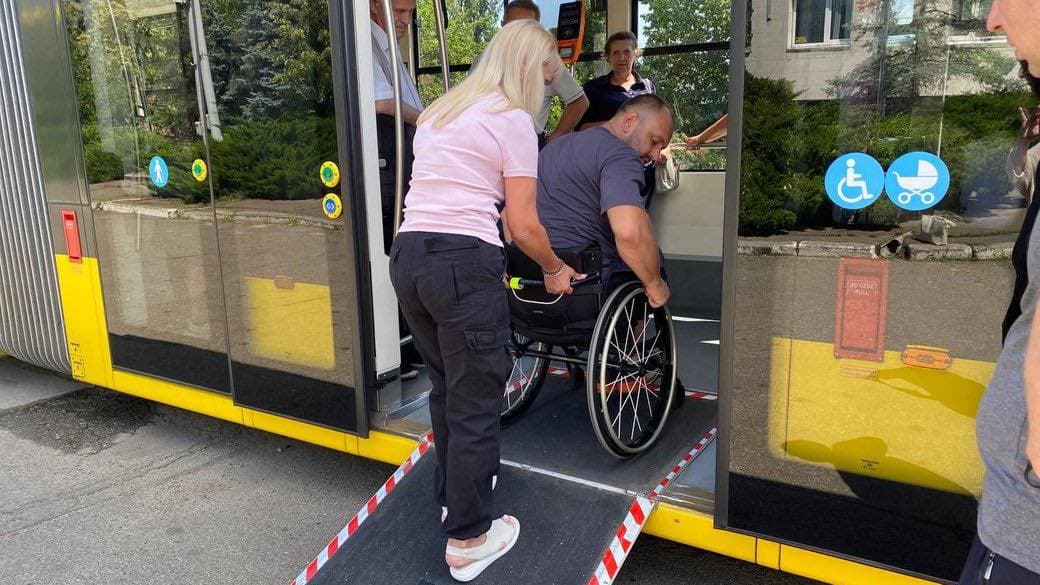
The National Assembly of People with Disabilities has appealed to the Verkhovna Rada of Ukraine not to adopt draft law No. 5651-2, which provides for changes in the area of travel benefits and other social guarantees.
Why this is a cause for concern
Experts emphasise that the proposed changes could lead to a reduction in the existing rights of persons with disabilities, pensioners, victims of the Chernobyl disaster, and other socially vulnerable groups.
In particular, the draft law provides for the transfer of funding for subsidised transport to local budgets without clearly defined sources of funding. In real terms, this creates the risk that communities will simply be unable to provide uninterrupted and accessible transport.
The consequences are obvious:
- reduction or abolition of subsidised transport;
- restriction of mobility for people for whom transport is a basic need, not a convenience;
- increased social tension and inequality between communities.
For LAOPD, this situation is yet another reminder: legislative changes should strengthen social guarantees, not shift responsibility without resources and clear implementation mechanisms.
Transport accessibility is not a bonus or a privilege.
It is a prerequisite for a dignified life, access to healthcare, work, education and social participation.
We insist that inclusiveness and equal access to services must remain inviolable principles of public policy, even — and especially — in times of war.
News and events
All publicationsEvents
Adaptive sports in Lviv: the path to recovery and community
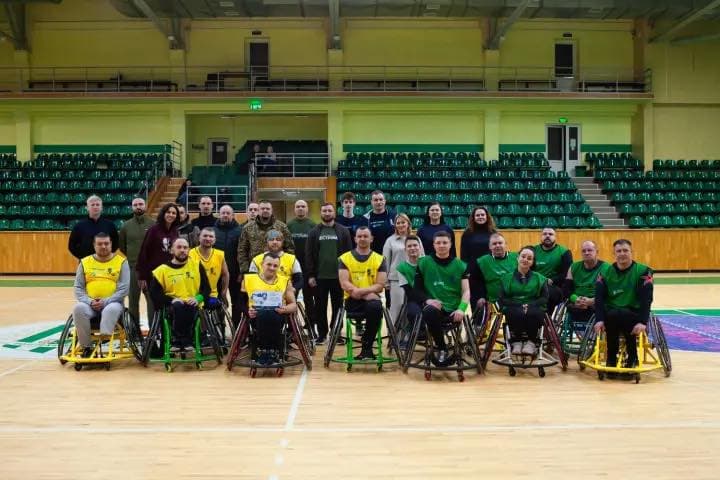
An important social project has been launched in Lviv, opening up new opportunities for veterans, combatants and people with disabilities. Adaptive sports here are not about formal training, but about returning to an active life, recovery and a sense of personal strength. It is more than just physical activity. It is a tool for support and social integration that helps to: improve physical health; overcome psychological barriers after trauma and loss; return to active participation in community life; find like-minded people and support in a safe, friendly environment. Adaptive sports take into account the individual physical abilities of each person. They are real, accessible and personalised. This is not a ‘one-size-fits-all’ programme, but an inclusive space where you can try, move at your own pace and feel confident in your body and spirit. For LAOPD, the value of such initiatives is obvious: they form communities without barriers to participation; they show that sport and activity are a right, not a privilege; they change society's attitude towards people with disabilities — from pity to respect and partnership. We welcome Lviv's initiative and call on communities across Ukraine to develop adaptive sports programmes for veterans, people with disabilities, and anyone who wants to move forward. Because accessibility is not just about spaces and services. It's about real life opportunities for everyone.
30.01.2026
Read more
Articles

Why does a community need an accessibility specialist, and why can't it function without one?
The real-life experience of Ukrainian communities shows that accessibility does not happen on its own. It does not arise from an order, a strategy, or a single ramp. It is created by people — with clear powers, responsibilities, and access to decision-making. That is why communities are increasingly creating a separate position or appointing a person responsible for accessibility issues. And this is not a formality. It is not an ‘additional burden’ for a secretary or project manager. This is a key specialist who: coordinates work between departments and the executive branch so that accessibility does not fall apart into fragments; identifies real barriers — physical, digital, communication — and proposes systemic solutions; develops and monitors an accessibility action plan; helps organise services and events so that all community members can participate. Without a clearly defined person in charge, accessibility quickly becomes ‘no one's issue’. Someone builds a ramp. Someone adds subtitles. But there is no system, no standard, and no accountability for results. Instead, a community with a barrier-free specialist gets real inclusion, not just imitation of change: people with disabilities, veterans, people with limited mobility, parents with prams, and older people can fully use spaces and services; decisions are no longer random and start to follow a single logic of accessibility; barrier-free access becomes part of planning, not just a paragraph in a report. We call on communities in Ukraine to: identify or create a barrier-free access specialist in each community. This is not just an investment in comfort. It is an investment in equal opportunities, dignity and development for every person who lives and works in your community.
29.01.2026
Read more
News

Barrier-free buildings: the rules are in place. But where is the accountability?
The Ministry of Community and Territorial Development of Ukraine has approved Methodological Recommendations for Creating a Barrier-Free Environment for Residential and Public Buildings (Order No. 94 of 20 January 2026). This is an important and long-awaited document. It provides clear, practical guidelines for those who plan, design, construct, renovate and maintain buildings. The recommendations describe accessibility not formally, but in essence — from entrances, ramps and lifts to common areas and residential premises. Particular emphasis is placed on: the accessibility of shelters and protective structures; the adaptation of housing for people who use wheelchairs; the needs of different groups — people with disabilities, older people, parents with prams, and people with reduced mobility. The document is recommended for use: in new construction; during reconstruction and major repairs; in the process of restoring damaged facilities; when adapting existing buildings. But the key question remains open. Who will monitor the implementation of these recommendations and how? And who will be held accountable if accessibility remains a mere formality? Without clear control mechanisms, public participation, and accountability for violations, we risk ending up with yet another well-intentioned document — without any real changes on the ground. LAOPD insists: barrier-free access is not a recommendation ‘if possible’. It is a basic condition for safety, dignity and equal rights. View the Order and Methodological Recommendations
28.01.2026
Read more