How big business is making accessibility a real standard
10.01.2026
Articles
In today's world, accessibility is no longer a ‘social bonus’ or marketing ploy. For responsible businesses, it is a basic standard — in products, services, workspaces, and communications. And the key here is not slogans, but systemic solutions.
Microsoft
The company operates on the principle of inclusive design, where accessibility is built in from the outset:
- Windows and Office have built-in screen readers, voice control, and flexible contrast settings;
- products are tested with people with disabilities, not ‘for them.’
Accessibility is integrated into everyday digital services:
- automatic subtitles and live captioning in Google Meet;
- advanced accessibility settings in Android;
- services for people with visual, hearing, and cognitive impairments.
IKEA
The company approaches inclusion through the design of spaces and objects:
- furniture that takes into account different physical abilities;
- accessible showrooms with wide aisles and clear navigation;
- separate product lines for people with motor impairments.
Starbucks
Barrier-free access is part of the customer experience and personnel policy:
- adapted coffee shops with accessible entrances and restrooms;
- training staff in ethical and correct interaction;
- employment of people with disabilities, including in specialised establishments.
Unilever
The company works with inclusion at the level of culture and communication:
- advertising campaigns without stereotypes;
- accessible product labelling;
- internal equality and diversity policies.
Why it matters
Barrier-free business:
- expands the customer base;
- increases trust in the brand;
- makes companies more resilient and competitive;
- fosters a culture of respect and equal opportunities.
For Ukraine, these examples are not ‘ideal experiences from abroad’ but clear guidelines. Business can and should be a partner in building a barrier-free society.
Barrier-free access is not an optional extra.
It is the new norm in modern business.
News and events
All publicationsEvents
LAOOI Team Strengthens Practical Protection Skills
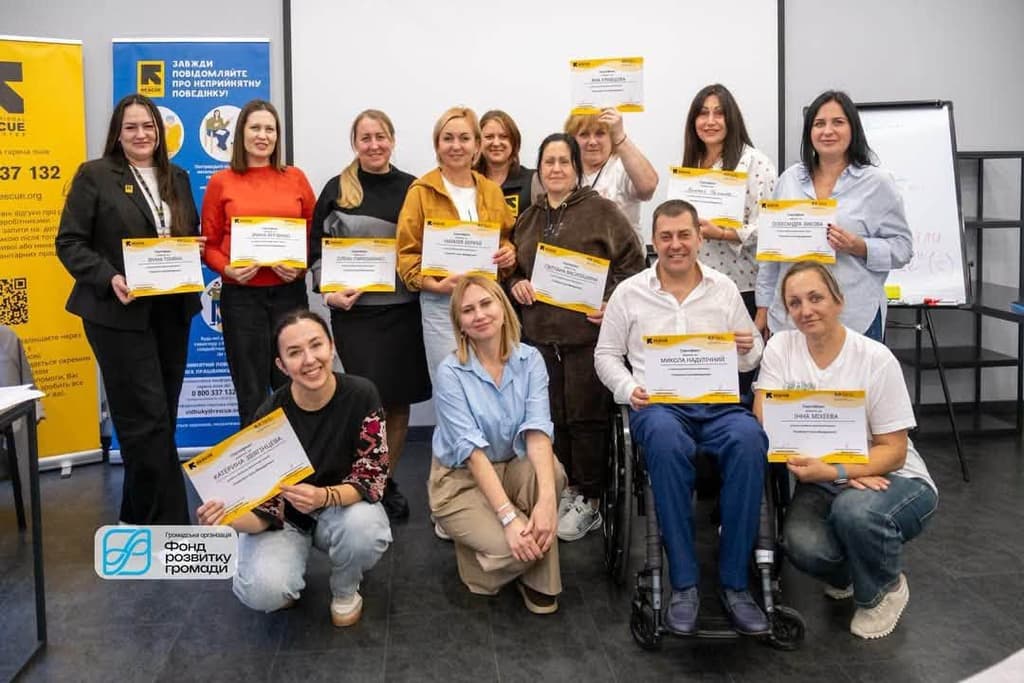
LAOOI Team Strengthens Practical Protection Skills The team from the "Luhansk Association of Organizations of Persons with Disabilities" (LAOOI) participated in a two-day practical training session on Protection Case Management. The training took place as part of the SAFE-PATH project and focused primarily on practical application—working with real and realistic case scenarios, making decisions, and identifying the safest and most effective ways to support individuals. Over the course of two days, participants examined the key stages of case management in detail: from risk assessment and action planning to referrals for necessary services, documentation, supervision, and case closure. Special attention was paid to handling complex cases, incorporating psychological support into case management, and gaining practical experience with the Primero system. For our team, such training sessions offer a vital opportunity to refine the approaches we use daily when working with vulnerable groups. After all, behind every case lies a real person with specific circumstances and needs; therefore, our solutions must be professional, safe, and person-centered. We extend our thanks to our partners—IRC Deutschland and the NGO "Community Development Fund"—as well as trainer Valentyna Zaliievska, for the practical and insightful training, the exchange of experience, and our collaborative efforts. The project "Inclusive Accommodation and Protection for Vulnerable IDPs in Kharkiv Oblast" is implemented by a consortium comprising the NGO "Luhansk Association of Organizations of Persons with Disabilities," the NGO "Community Development Fund," and the International Rescue Committee (IRC), with support from Sweden provided through the Swedish International Development Cooperation Agency (Sida). Photo: Community Development Fund #go2frg
06.10.2026
Read more
Articles
Barrier-free accessibility is tested in motion, not just on paper
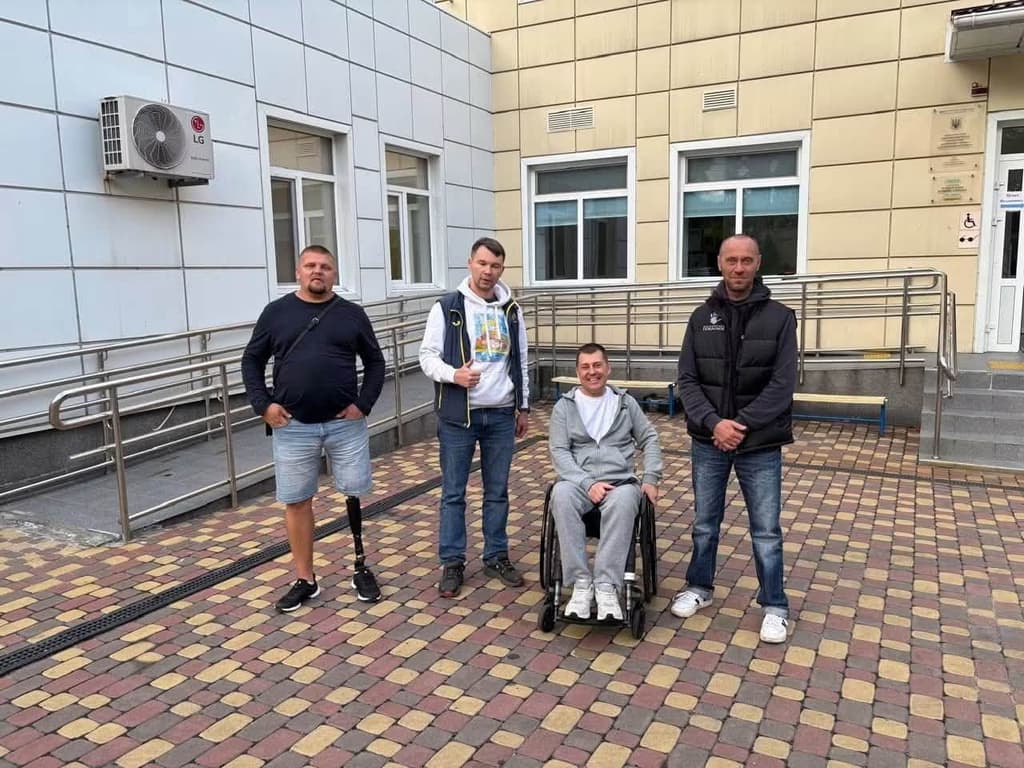
Can a person in a wheelchair enter the building independently? Is there enough room to maneuver inside? Is the restroom convenient to use? Is the route safe for someone with a prosthesis? This is precisely how the accessibility of the Transit Center in Voloske village (Dnipro district, Dnipropetrovsk region) was tested—in practice. The inspection involved Mykola Nadulichnyi, Head of the "Luhansk Association of Organizations of Persons with Disabilities," an ambassador for the "Movement Without Barriers" project and an expert on the National Strategy for Creating a Barrier-Free Environment in Ukraine. Together with other participants, Mykola Nadulichnyi did more than just look at the premises; they traversed the center’s main routes exactly as various people would on a daily basis. They checked entrances and exits, the width of passageways and doorways, movement routes, ramps, sanitary facilities, and signage. They evaluated the space specifically from the perspectives of a wheelchair user and a person using a prosthesis. After all, details like measurements, slopes, thresholds, or poorly placed equipment—which some might not even notice—can become real obstacles for others. There was also a discussion about communication accessibility: how center staff can properly interact with people with disabilities, and how to provide clear information and assistance without undermining a person's independence. All identified barriers were documented on-site, and potential solutions were discussed. Based on the inspection, recommendations were developed to further improve the accessibility of the Transit Center. For us, a barrier-free environment is a space that a person can truly use—independently, safely, and with dignity. That is why accessibility requires more than just planning; it must be verified in practice.
02.10.2026
Read more
Articles

From a single training session to community-wide change
From a single training session to community-wide change: how LAOOI fosters a culture of barrier-free accessibility Barrier-free accessibility does not begin with a ramp, nor does it end with an accessible building entrance. It starts with people—with how professionals perceive another person's needs, how they communicate, how they respond to challenging situations, and the assistance they can offer. That is precisely why professional training is one of the key avenues through which the "Luhansk Association of Organizations of Persons with Disabilities" (LAOOI) systematically drives societal change. Recently, the LAOOI team conducted a three-day training session in Dnipro titled "Barrier-Free Accessibility in Action: Inclusion. Protection. Resilience" for healthcare professionals from the Nikopol district of the Dnipropetrovsk region. Yet, for us, the training itself is not the only thing that matters; what follows is equally important. Each participant returns to their facility—to their patients, colleagues, and daily routine—and the knowledge gained over those three days begins to make a difference right there. This is how change happens: one trained individual alters the approach within their workplace; a team transforms the facility's operations; and dozens or hundreds of trained professionals gradually reshape the entire system. Over the course of LAOOI’s work, dozens of people have completed training on barrier-free accessibility, inclusion, and protection. These are professionals from various fields who work with people daily and can translate the knowledge they have acquired into concrete solutions within their communities. For LAOOI, therefore, each such training session represents far more than just three days of instruction and a certificate of completion. This is an investment in an environment where individuals do not have to constantly prove their right to accessibility, respect, and support. The training took place as part of the project "Integrated Protection, Health, and Inclusion for Vulnerable Newly Displaced Persons, Internally Displaced Persons (IDPs), and Particularly Vulnerable Groups in the Dnipropetrovsk, Zaporizhzhia, and Donetsk Regions (Priorities 1, 2, 4)." The project is supported by the Ukraine Humanitarian Fund (UHF) and implemented by the "Luhansk Association of Organizations of Persons with Disabilities" (LAOOI) and Volontariato Internazionale per lo Sviluppo (VIS). Removing barriers becomes a reality when knowledge translates into daily practice. And that is precisely the kind of change we strive for.
30.09.2026
Read more